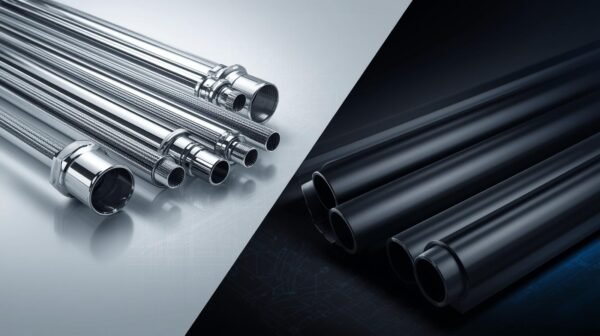
Selecting the right conduit system is one of those behind-the-scenes decisions that can have an outsized impact on your project’s bottom line.
For professionals in construction, geotechnical and surveying fields, the choice often comes down to metallic vs. polyamide conduits.
Each material has clear advantages, cost considerations and performance trade-offs.
Why Conduit Choice Matters
Whether you’re designing a data center, outfitting an industrial plant or laying out infrastructure, conduits are more than just about compliance.
They’re about efficiency, durability and cost control. A well-matched conduit system:
- Protects cables from mechanical stress, heat and chemicals.
- Ensures compliance with electrical and safety codes.
- Reduces maintenance downtime.
- Can save significant money over the project life cycle.
Choosing the wrong one can mean higher replacement costs, safety risks or delays.
Methodology
How do you decide between metallic and polyamide conduits? The comparison is framed around:
- Material and performance properties: Durability, resistance, flexibility
- Cost breakdowns: Initial purchase vs. long-term expenses
- Installation factors: Time, labor intensity and tooling requirements
- Life cycle analysis: Maintenance, replacement intervals and downtime costs
- Vendor considerations: Availability, support and reliability
Looking at both technical performance and real-world costs will help you select the option that delivers the most value.
Metallic vs. Polyamide Conduits: The Core Differences
When choosing between metallic and polyamide conduits, start with the basics. Both materials serve the same purpose — protecting cables and ensuring system integrity — but they do so in very different ways.
The differences become clear when you look at their properties, installation requirements and environmental performance.
Material Properties
Metallic conduits, typically made from steel, stainless steel or aluminum, are valued for their mechanical strength and their ability to shield against electromagnetic interference (EMI).
They are less flexible and heavier than their plastic counterparts, and unless treated with coatings, they can be prone to corrosion.
Polyamide conduits, on the other hand, are lightweight and engineered for flexibility. They offer strong resistance to chemicals, oils and UV exposure, though they do not provide natural EMI shielding and are not as robust under extreme mechanical loads.
Installation and Handling
Installation is another area where the two materials diverge. Metallic conduits require precise cutting, threading and the use of specific tools, making them more labor-intensive and time-consuming to install.
Polyamide conduits simplify this process — they can be cut quickly, snapped into fittings and routed easily around corners.
This ease of handling often translates into significant labor savings, particularly in projects with complex or space-constrained cable layouts.
Environmental Suitability
Environmental conditions often determine which conduit is the smarter choice. Metallic conduits excel in environments where high mechanical stress or EMI protection is a concern, such as industrial plants with heavy machinery.
However, they can struggle in corrosive or moisture-rich settings unless they receive extra protective treatments.
Polyamide conduits are well-suited to outdoor installations, chemical facilities, and coastal projects where corrosion resistance and UV stability are critical. Their flexibility also makes them ideal for dynamic applications where cables need to move without strain.
How to Compare Metallic vs. Polyamide Conduits Costs for Your Project
Comparing the costs of metallic and polyamide conduits isn’t just about checking price tags. To make the right choice, you need to assess both immediate expenses and long-term impacts.
Breaking the process into stages makes capturing the full financial picture easier.
Define Project Conditions
The first step is to examine the environment in which the conduits will be used. Indoor versus outdoor settings, the presence of chemicals or saltwater, and the expected level of mechanical stress all influence which material will perform more reliably.
Without a clear understanding of conditions, cost comparisons will be incomplete.
Calculate Direct Costs
Once conditions are set, the next step is to calculate direct costs. This includes the price of the conduits per meter, the fittings and accessories needed, and the labor hours required for installation.
Metallic conduits often demand more skilled labor and additional time, while polyamide conduits are quicker to cut, route and secure — a difference that can shift project budgets significantly.
Estimate Life Cycle Expenses
Beyond upfront costs, life cycle expenses must be factored in. Metallic conduits may face issues like corrosion or rust in harsh environments, increasing replacement or repair frequency.
Polyamide conduits hold up well against chemicals and UV exposure, but they may need reinforcement or earlier replacement in high-impact or heavy-load areas. Considering these variables helps you avoid underestimating long-term costs.
Account for Downtime
Downtime costs are sometimes overlooked, but they can outweigh material expenses. Repairs involving metallic conduits often require invasive work and extended outage times, while polyamide conduits can usually be replaced faster and with less disruption.
This factor is especially critical for facilities where downtime translates directly into lost revenue.
Run a Total Cost of Ownership Model
The final step is to combine all these factors into a total cost of ownership model. By projecting five- or ten-year costs for both conduit types, you can see the true financial impact of your choice.
Polyamide conduits often demonstrate clear savings in corrosive or outdoor environments, while metallic conduits justify their higher initial cost in EMI-sensitive industrial settings.
Leading Conduit Manufacturers and Distributors
If you’re looking for suppliers to compare pricing and specs, here’s a list to start with.
1. AerosUSA
AerosUSA is a trusted marketplace and distributor of advanced cable and wire protection systems, serving industries that demand safety, reliability and efficiency.
From robotics and HVAC to transportation, renewable energy and healthcare, their solutions help protect mission-critical cables in environments that require flexibility, durability and long service life.
Known for its quick response times and customer-first approach, AerosUSA stands apart from rigid corporate suppliers by offering fast quotes, low minimum orders and quick-turn deliveries.
Their extensive inventory includes ROHRflex conduits and FLEXAquick connectors, engineered for high UV resistance, impact strength, sealing against dust and water, and flame-retardant performance.
These products safeguard cables and reduce labor costs with easy, snap-on installation.
Backed by worldwide approvals, UL certifications and strong customer testimonials, AerosUSA combines innovation with dependability. Their tagline says it best: “Unsurpassed in cable protection and strain relief.”
2. ABB
ABB is a global leader in electrification and automation with more than 140 years of history and around 110,000 employees worldwide.
Known as one of the foremost conduit manufacturers and distributors, ABB delivers advanced conduit and fitting systems designed to protect cables in demanding environments such as power generation, transportation, robotics, food processing, offshore drilling and renewable energy.
 Their portfolio spans metallic, non-metallic, liquid-tight and specialist conduit solutions through trusted brands, including PMA, Adaptaflex, Harnessflex, Kopex and T&B Liquidtight Systems.
These systems address challenges like extreme temperatures, corrosive settings, liquid ingress, explosive atmospheres, and heavy-duty industrial use while reducing installation costs and downtime.
Beyond cable protection, ABB is recognized for its strong commitment to sustainability, continuous innovation through significant R&D investment and a values-driven approach that emphasizes integrity, collaboration and care.
This combination makes ABB a trusted partner for industries seeking reliable, future-ready conduit protection worldwide.
3. HellermannTyton
HellermannTyton is a global leader in cable management solutions, with a history dating back to 1935 and operations spanning 40 countries. With over 7,000 employees and 18 manufacturing facilities worldwide, the company delivers a comprehensive range of products for fastening, insulating, connecting, protecting, and identifying electrical and data cables.
Known as one of the leading conduit manufacturers and distributors, HellermannTyton offers both non-metallic and metallic conduit systems designed for demanding environments, from industrial plants to renewable energy installations.
Their expertise extends across industries such as automotive, aerospace, rail, food and beverage, shipbuilding, telecommunications and wind power.
Innovation is central to their approach, with solutions like the Loop Spacer for wind turbines and advanced thermoplastic engineering for custom applications.
Sustainability is also a core focus, with product lines incorporating recycled, bio-based and ocean-recovered materials. This blend of technical expertise, global reach, and sustainable design makes HellermannTyton a trusted name in cable and conduit protection.
4. Legrand
Legrand is a global specialist in electrical and digital infrastructure with more than 150 years of innovation and a presence in nearly 90 countries.
The company delivers a wide portfolio of conduit and cable management systems, including conduits, trunking, ducts and workstation solutions. It is supported by a fully accessible e-catalog with technical data, BIM files and certifications.
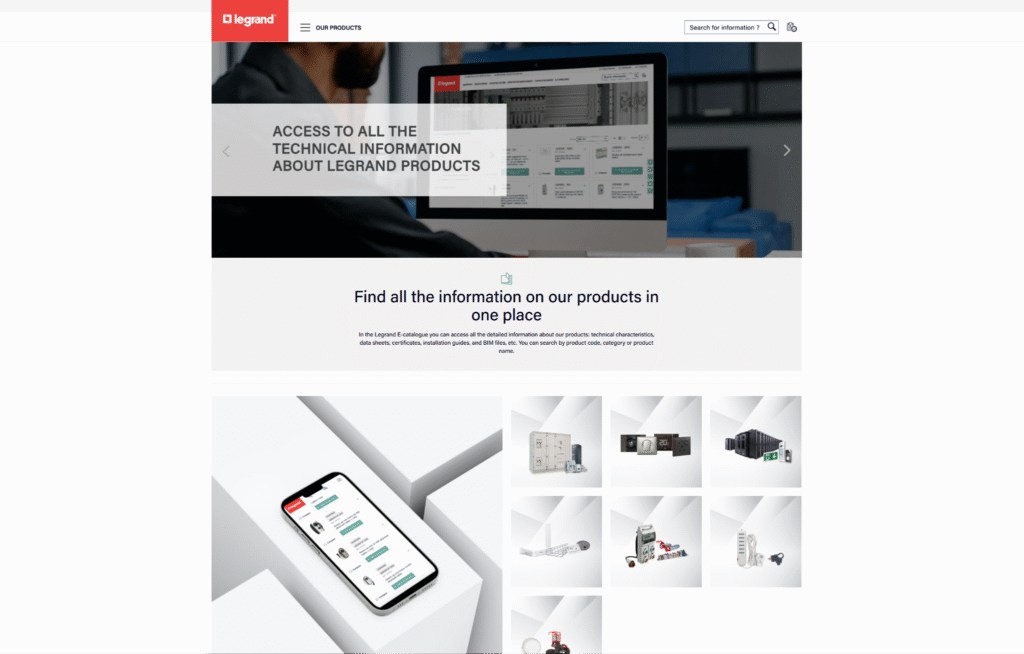
Guided by a strong purpose of improving everyday life, Legrand embeds values such as inclusion, simplicity, reliability and collective innovation across its operations.
Sustainability is central to its strategy, with clear targets like achieving Net Zero by 2050, eliminating single-use plastics in packaging and ensuring most of its sales come from eco-responsible solutions.
By combining advanced product design, digital connectivity and a commitment to the circular economy, Legrand provides safe, efficient and future-ready systems for residential, commercial and industrial buildings — making it one of the world’s leading conduit manufacturers and distributors.
5. Anamet Electrical, Inc.
Anamet Electrical, Inc. is a pioneer in liquid-tight, flexible conduit systems, with over 115 years of expertise in metal hose technology.
Headquartered in Illinois and supported by affiliates in Canada and Europe, the company is recognized globally for its ANACONDA SEALTITE conduit, first UL-listed in 1949 and still produced in the USA today.
Designed to perform where rigid conduit falls short, Anamet’s solutions protect wiring in demanding environments such as hazardous locations, food-grade facilities, extreme temperatures, UV exposure, and areas prone to vibration or corrosion.
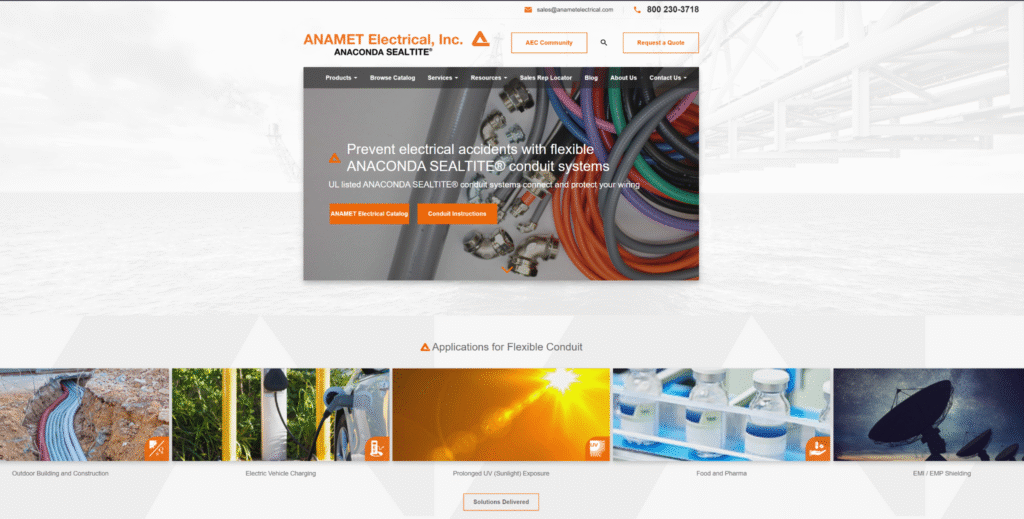
Their catalog spans various conduits and corrosion-resistant fittings, rigorously tested to meet UL, CSA, NEC, IEEE and NSF standards.
Beyond products, Anamet provides tailored services including custom marking, cutting, burnishing, braiding and specialized liquid-tight covers to meet unique project needs.
By delivering safe, durable and adaptable wiring protection on land, at sea and in the air, Anamet has become the world’s largest manufacturer and trusted flexible metal conduit systems supplier.
Comparing Leading Conduit Manufacturers
When evaluating conduit suppliers, it helps to look beyond product catalogs and consider each company’s strengths — from innovation and sustainability to industry specialization and global reach. Below is a side-by-side comparison of five top conduit manufacturers and distributors.
| Company | Core Strengths | Product Range Highlights | Industry Focus | Global Reach / Presence | Unique Value |
| AerosUSA | Specializes in advanced cable and conduit protection systems for demanding environments | Wide selection of conduits, fittings, cable glands and ventilation solutions | Industrial automation, transportation, renewable energy, heavy equipment | Strong U.S. presence with partnerships abroad | Known for tailored solutions and quick lead times |
| ABB | Technology leader with 140+ years of engineering expertise | Conduits, fittings, cable protection brands (PMA, Adaptaflex, Harnessflex, Kopex, T&B Liquidtight, Steel City) | Power generation, robotics, food processing, mining, offshore, infrastructure | Operates in 100+ countries, ~110,000 employees | Deep R&D investment (4-5% annual revenue) and broad brand portfolio |
| HellermannTyton | Focuses on high-performance cable management and identification systems | Conduits, fittings, cable ties, identification and network connectivity products | Automotive, aerospace, telecom, industrial, construction | Operations in 80+ countries | Strong sustainability initiatives and ISO-certified manufacturing |
| Legrand | Over 150 years of innovation in building infrastructure and connected solutions | Conduits, trunking, cable management, workstation systems | Residential, commercial and industrial buildings | Present in nearly 90 countries worldwide | Strong CSR roadmap with Net Zero by 2050 target |
| Anamet Electrical, Inc. | Pioneer in flexible, liquid-tight conduit systems since 1908 | ANACONDA SEALTITE conduit lines for extreme conditions (UV, food-grade, EMI, hazardous locations) | Construction, industrial plants, marine, defense, food processing | Headquarters in Illinois with affiliates in Canada and Europe | Largest global supplier of liquid-tight flexible metal conduit |
How to Choose the Right Company
Price isn’t the only factor when choosing a supplier. Evaluate them based on:
- Technical support: Do they provide detailed spec sheets, testing data and installation guides?
- Product range: Can they supply both metallic and polyamide options or only one type?
- Compliance and certification: UL, CSA, CE or ISO certifications matter for approvals.
- Availability and logistics: Check stock levels and delivery times to avoid project delays.
- After-sales support: A strong warranty and responsive service team add long-term value.
Smart Conduit Choices Mean Smarter Savings
The debate between metallic vs. polyamide conduits isn’t about which is “better” universally — it’s about which is right for your project.
Metallic conduits shine where strength and EMI protection are essential, while polyamide conduits deliver savings and flexibility in corrosive or outdoor environments.
When comparing the cost of metallic and polyamide conduits, remember that it goes far beyond the upfront purchase price.
Consider installation, maintenance and downtime alongside material costs. By applying this methodology and choosing the right supplier, you’ll make a strategic decision that meets technical requirements and drives measurable project savings.
Also Read
7 Essential Cable Protection Methods Every Electrician Should Know
Top 5 Steel Companies Dominating South Africa’s Market in 2025

- SODECA Highlights Industrial Ventilation Technology at Mega Clima Expo Kenya 2026 - October 14, 2026
- How They Were Built: Inside the Engineering of the Lesotho Highlands Water Project - October 11, 2026
- Africa’s Water Reuse Opportunity: Building the Infrastructure for a Water-Secure Future - September 28, 2026