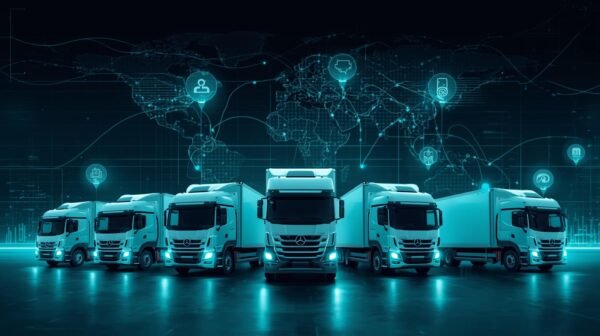
Fleets are the lifeblood of modern commerce, but managing them is a complex puzzle of logistics, maintenance, and cost control.
The smallest inefficiency can ripple through an entire operation, impacting delivery times, fuel budgets, and vehicle lifespan.
Fortunately, advanced sensor technologies are providing fleet managers with the data-driven tools they need to optimize every aspect of their operations, turning potential problems into opportunities for improvement.
This post explores how sensors are revolutionizing fleet management. We will cover the key types of sensors being used, the substantial benefits they offer, and what the future holds for this transformative technology.
By harnessing the power of real-time data, you can unlock new levels of efficiency and gain a significant competitive edge.
An Introduction to Fleet Sensor Technology
At its core, sensor technology in fleet management involves placing small, intelligent devices on vehicles to collect and transmit data.
These sensors act as the eyes and ears of your fleet, monitoring everything from location and speed to engine health and cargo temperature.
This information is sent back to a central management platform, giving you a complete, up-to-the-minute view of your entire operation.
Instead of relying on manual logs and reactive maintenance, fleet managers can now use this stream of data to make proactive, informed decisions.
This shift from guesswork to data-backed strategy is the key to unlocking major gains in efficiency, safety, and profitability.
Key Types of Sensors Used in Fleet Management
A modern fleet vehicle can be equipped with a wide array of sensors, each serving a specific purpose. Together, they create a comprehensive data ecosystem.
GPS and Telematics Trackers
Global Positioning System (GPS) sensors are the foundation of modern fleet management. They provide real-time location data, allowing you to track vehicle movements, optimize routes, and provide customers with accurate ETAs.
When combined with telematics systems, GPS data can also reveal speed, mileage, and idle time, offering a clear picture of how each vehicle is being used.
Fuel Level and Consumption Sensors
Fuel is one of the largest expenses for any fleet. Fuel sensors monitor the amount of fuel in the tank with high precision, helping to detect theft and discrepancies.
More advanced sensors track fuel consumption in real-time, identifying which vehicles or driving behaviors are burning excess fuel. This data helps you create more effective fuel-saving strategies.
Tire Pressure Monitoring Systems (TPMS)
Proper tire inflation is critical for both safety and fuel efficiency. A TPMS automatically monitors the air pressure in each tire and alerts the driver and fleet manager if it falls below a safe level.
This prevents tire blowouts, reduces uneven wear, and can improve fuel economy by ensuring tires are always at their optimal pressure.
Engine and Vehicle Diagnostic Sensors (OBD-II)
On-Board Diagnostic (OBD-II) sensors plug directly into a vehicle’s diagnostic port. They monitor the health of the engine, transmission, and emissions system.
These sensors can detect fault codes and potential issues long before they lead to a breakdown, enabling a shift from reactive repairs to predictive maintenance.
Axle Load and Weight Sensors
For fleets hauling cargo, overloading vehicles is a serious risk that can lead to fines, excessive wear and tear, and safety hazards.
Axle load sensors measure the weight on each axle, ensuring that vehicles are loaded within legal limits. This helps optimize payload distribution and avoid costly violations.
The Core Benefits of Sensor-Driven Fleet Management
Integrating these technologies delivers tangible benefits that directly impact your bottom line and operational performance.
Real-Time Data for Proactive Decisions
The most significant advantage of sensor technology is access to real-time information. You no longer have to wait for drivers to return to the depot to understand what happened on the road.
With live data, you can reroute a vehicle to avoid traffic, respond instantly to a maintenance alert, or verify a delivery as it happens. This empowers managers to solve problems proactively, not reactively.
Predictive Maintenance and Reduced Downtime
Vehicle downtime is a major drain on revenue. Sensor data allows you to move from a fixed maintenance schedule to a predictive one. By monitoring engine diagnostics, fluid levels, and component performance, you can identify a potential failure before it occurs.
Scheduling repairs based on actual need, rather than mileage alone, prevents unexpected breakdowns, extends vehicle life, and keeps your fleet on the road.
Improved Fuel Efficiency
Sensors provide the detailed data needed to tackle high fuel costs. By tracking idle time, harsh acceleration, and inefficient routing, you can identify key areas for improvement.
For example, data might show that a particular route involves excessive stop-and-go traffic, prompting a change.
Or it could highlight a driver who consistently idles for long periods, creating a coaching opportunity. These small adjustments add up to significant fuel savings across the fleet.
Enhanced Driver Behavior and Safety
Driver performance is directly linked to safety and efficiency. Telematics sensors monitor behaviors like speeding, harsh braking, and rapid acceleration.
This data provides objective insights into driving habits, allowing you to create targeted training programs and reward safe drivers.
A safer driving culture not only reduces accidents and insurance premiums but also leads to lower maintenance costs and better fuel economy.
Real-World Success with Sensor Technology
Many companies have already transformed their operations by adopting fleet sensors. For example, a major national logistics company integrated GPS and fuel sensors across its fleet of over 500 to combat rising fuel costs.
By analyzing route and idling data, they identified inefficiencies and implemented new driver guidelines.
Within the first year, the company reduced its fuel consumption by 12% and cut idle time by nearly 25%, saving millions of dollars annually.
In another case, a construction firm equipped its heavy machinery with OBD-II diagnostic sensors.
The system flagged a recurring coolant temperature issue in several excavators. By addressing the problem before it caused engine failure, the firm avoided an estimated $150,000 in repair costs and prevented weeks of project delays from equipment downtime.
The Future of Sensor Technology in Fleets
Innovation in this field is moving quickly. The future promises even more sophisticated and integrated sensor solutions.
AI and Machine Learning: Future platforms will use artificial intelligence to analyze sensor data more deeply, predicting maintenance needs with even greater accuracy and identifying complex efficiency patterns that are invisible to human analysts.
Video Telematics: The integration of AI-powered dashcams with other sensors will provide complete context for driving events. These systems can identify distracted driving or fatigue in real-time and provide in-cab alerts to prevent accidents before they happen.
Electric Vehicle (EV) Integration: As fleets transition to electric, sensors will play a crucial role in managing battery health, monitoring state of charge, and optimizing charging schedules to minimize cost and downtime.
IoT and Smart City Integration: In the future, vehicles will communicate not just with the fleet office but with other vehicles and smart city infrastructure. This Vehicle-to-Everything (V2X) communication will use sensor data to help vehicles navigate traffic, find parking, and avoid hazards more efficiently than ever before.
Driving Your Fleet Forward
Sensor technology is no longer a futuristic concept—it is an essential tool for any modern fleet operation.
By providing clear, actionable data on everything from vehicle health to driver behavior, these systems empower you to cut costs, improve safety, and boost overall efficiency.
Embracing this technology is the surest way to build a smarter, more resilient, and more profitable fleet for the future.
Also Read
AI and Paints: How Artificial Intelligence is Transforming the Paint and Coatings Industry
The Future of Electrical Distribution Equipment: Trends Every Utility Company Should Know

- SODECA Highlights Industrial Ventilation Technology at Mega Clima Expo Kenya 2026 - October 14, 2026
- How They Were Built: Inside the Engineering of the Lesotho Highlands Water Project - October 11, 2026
- Africa’s Water Reuse Opportunity: Building the Infrastructure for a Water-Secure Future - September 28, 2026