
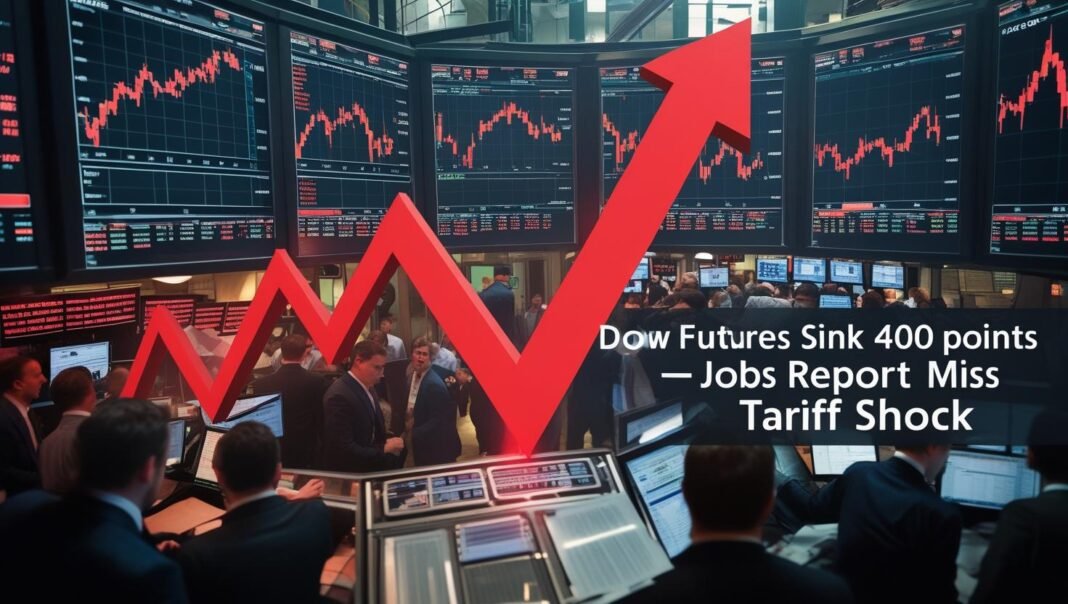
Global markets were rattled on Friday as weak U.S. jobs data combined with sweeping new tariffs from President Donald Trump sparked a sell-off in equity futures.
The twin blows heightened fears of a slowing economy and an escalating trade conflict, sending investors scrambling for safer assets.
Jobs Growth Slows Sharply in July
The latest Labor Department report showed the U.S. economy added just 73,000 jobs in July, well below analysts’ expectations of around 110,000.
Compounding the disappointment, previous months’ figures were revised downward by 258,000 jobs, pointing to a broader cooling in the labor market.
Unemployment held steady at 4.2%, while average hourly earnings rose 0.3%, in line with forecasts.
However, the overall picture added to mounting concerns that the post-pandemic recovery is losing steam, potentially pushing the Federal Reserve closer to cutting interest rates in September.
Trump Tariffs Spark Global Tensions
Minutes after the jobs report, President Trump unveiled a sweeping tariff package that imposes duties of 10% to 41% on a range of imports from key U.S. trading partners.
Canada, Brazil, India, and Taiwan were among the nations hit with new levies, with some Canadian exports facing rates as high as 35%.
The move, aimed at protecting U.S. industries, drew swift criticism from economists and trade partners who warned it could spark retaliatory measures and disrupt global supply chains already under strain.
Markets React: A Broad Sell-Off
The reaction in financial markets was swift and severe. Dow futures plunged over 400 points, while S&P 500 and Nasdaq futures both tumbled around 1% in premarket trading.
The CBOE Volatility Index (VIX), often referred to as Wall Street’s fear gauge, jumped sharply, signaling heightened investor anxiety.
Tech stocks bore the brunt of the sell-off, with Amazon shares dropping more than 8% despite beating quarterly earnings expectations.
Apple rose modestly after strong services revenue growth but warned it faces over $1 billion in tariff-related costs in the coming quarters.
What’s Next for Investors?
With weak employment data raising recession fears and aggressive trade policies clouding global growth prospects, analysts say market volatility may persist in the weeks ahead.
All eyes are now on the Federal Reserve, with bets on a September interest rate cut climbing to nearly 65%, according to futures markets.
Investors are also watching for potential retaliation from U.S. trading partners, which could further pressure stocks and global trade flows in the coming months.
Also Read
South Africa’s Repo Rate Cut Eases Financial Pressure
Meta Smashes Q2 Estimates, Shares Surge as AI Strategy Fuels Growth Outlook

- Cobots on the Beam: How Collaborative Robots Are Reshaping Mid-Sized Fabrication Shops - June 2, 2026
- U.S. Construction Spending Beats Expectations in April with 0.4% Rise as Housing and Infrastructure Provide Support - June 2, 2026
- The Big Shift: Why InstallerSHOW 2026 is Now a Major Construction Event - June 2, 2026
