
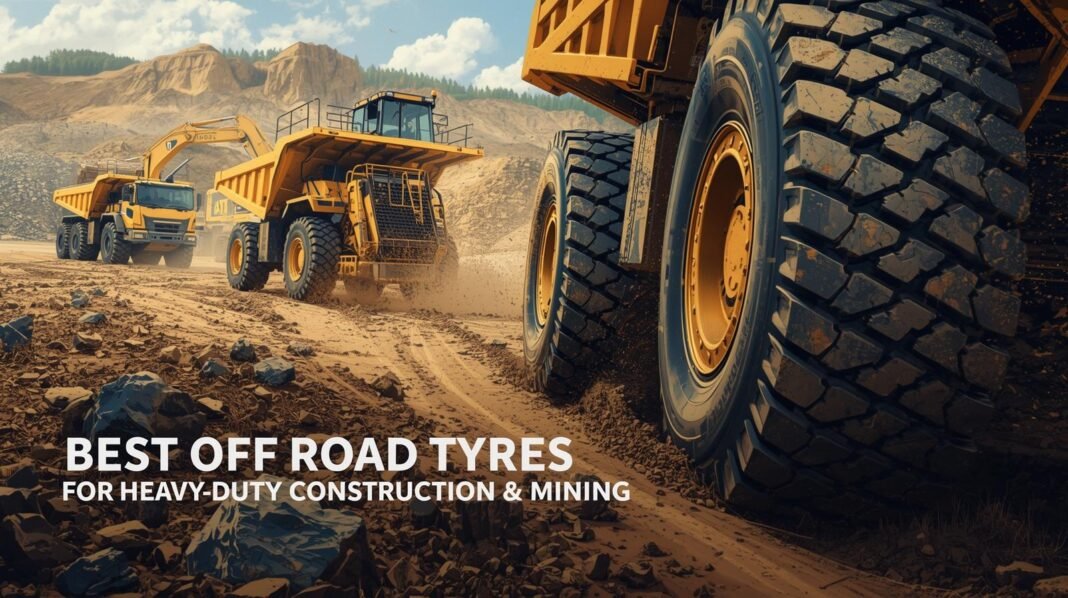
In the high-stakes world of heavy-duty construction and mining, no single component affects productivity, safety, and operational cost quite like the tyres fitted to your equipment.
Whether you are managing a fleet of articulated dump trucks on a remote African iron ore mine, operating wheel loaders on a coastal construction project, or supervising motor graders on a road rehabilitation programme, choosing the right off road tyres — often referred to as OTR (Off The Road) tyres — is a decision that directly impacts your bottom line.
The global OTR tyre market is valued at billions of dollars annually, driven by surging demand from the mining and infrastructure sectors across Africa, Latin America, and Southeast Asia.
Unplanned tyre failures alone can cost mining operators hundreds of thousands of dollars per day in lost production.
Yet many fleet managers still treat tyres as an afterthought — purchasing on price alone without fully accounting for total cost of ownership, terrain compatibility, or load ratings.
This comprehensive guide from CCE NEWS is designed to help construction managers, equipment operators, and fleet managers make informed, data-driven decisions about heavy equipment tyres.
From understanding the critical performance attributes of OTR tyres to reviewing the industry’s leading brands and emerging smart tyre technologies, we cover everything you need to know.
| 💡 Related Reading: See our CCE NEWS guide on ‘Fleet Management Best Practices for African Construction Projects’ and ‘How to Reduce Heavy Equipment Downtime by 40%’ for complementary strategies. |
Key Features of High-Performance Off Road Tyres
Not all off road tyres are created equal. The demands placed on construction tyres and mining tyres are fundamentally different from those in road transport. Here are the four pillars of OTR tyre performance that every procurement professional should understand:
1. Traction and Tread Patterns
Traction is the defining characteristic of any best off road tyre. OTR tyres are engineered with aggressive, deep tread patterns designed to bite into soft earth, gravel, mud, and rock. The most common patterns include:
- L-5 Rock (deep, self-cleaning lugs for hard rock quarry and mining applications)
- E-3/E-4 tread for earthmover and dump truck applications offering excellent traction on loose material
- L-3 All-Traction (ideal for loaders working in mixed-surface conditions)
- Smooth or semi-smooth patterns for compactors and certain underground applications
Choosing the wrong tread pattern for your terrain can reduce tyre life by up to 50% and significantly compromise equipment stability.
2. Load-Bearing Capacity
OTR tyres are designed to carry extreme loads. A single rear tyre on a 400-tonne ultra-class haul truck can carry a payload exceeding 100 tonnes. Load ratings are expressed using Tonne-Kilometre Per Hour (TKPH) — a critical metric that accounts for both load weight and travel speed.
Exceeding a tyre’s TKPH rating is one of the most common causes of heat build-up and premature failure. Always match tyre load index ratings to your equipment’s gross vehicle weight and operational cycle times.
3. Cut, Puncture, and Heat Resistance
Mining and construction sites are littered with sharp rocks, metal debris, and other hazards that would destroy ordinary tyres in minutes.
High-performance OTR tyres feature reinforced carcass construction with multiple layers of cut-resistant steel or nylon cord, compound formulations with high silica content for improved tear resistance, and heat-resistant compounds engineered to dissipate the enormous thermal energy generated during continuous operation.
Heat build-up is the number one killer of OTR tyres — it accelerates compound degradation and leads to tread separation and carcass failure.
4. Sidewall Protection and Durability
The sidewall of an OTR tyre is its most vulnerable area. Rock strikes, kerb impacts, and equipment carelessness routinely damage sidewalls in ways that are invisible to the naked eye but catastrophically weaken the tyre’s structure.
Premium OTR tyres incorporate thick, reinforced sidewalls with extra rubber depth, anti-chipping compounds, and sometimes steel or Kevlar reinforcement. The investment in superior sidewall protection pays dividends in dramatically reduced blowout incidents and extended service life.
| 💡 Pro Tip: Always specify sidewall protection grade (standard, reinforced, or extra reinforced) when ordering OTR tyres for rocky terrain applications. Under-specifying this feature is an expensive mistake. |
Top Off Road Tyres for Heavy-Duty Applications
The global OTR tyre market is dominated by a handful of tier-one manufacturers alongside a growing number of competitive mid-range brands. Here is an authoritative overview of the leading options available to African and global operators:
| Brand / Model | Key Strengths | Ideal Application |
| Michelin XDR3 | Ultra-low heat build-up, exceptional TKPH, long-distance haul trucks | Large open-cut mines, ultra-class haul trucks |
| Bridgestone VMTP | V-Steel Mine pattern, superior rock resistance, extended retreading | Hard rock quarries, underground mining |
| Goodyear RL-5K | Advanced compound, excellent traction on wet rock, high load rating | Wet mining environments, loaders |
| Continental HaulMaster | Optimised TKPH, reinforced bead area, heat management tech | Long-haul dump trucks, African mine sites |
| BKT EARTHMAX SR 41 | Exceptional value, deep E-4 lug, extended tread life | Budget-conscious construction & quarry ops |
| Yokohama E71 | Rigid dump truck specialist, balanced cut & heat resistance | African iron ore and coal hauling |
| Titan International | US-made, specialist agriculture-to-mining crossover range | Mixed-terrain construction, graders |
Michelin — Premium Performance for the Harshest Conditions
Michelin’s OTR range, anchored by the XDR3 (Extra Duty Radial), is the benchmark for ultra-class haul truck applications.
The XDR3 is engineered to operate in extreme heat and carry unprecedented loads while delivering the lowest possible heat build-up in its class.
Michelin’s proprietary compound technologies allow operators to maximise TKPH while extending tyre intervals.
For African mining operations where haul cycles are long and ambient temperatures are extreme, Michelin remains the gold standard — though the premium price demands thorough total cost of ownership analysis.
Bridgestone — Engineering Precision for Underground and Surface Mining
Bridgestone’s V-Steel Mine Truck Pattern (VMTP) series is purpose-built for the most demanding surface and underground mining environments. Bridgestone excels in producing tyres that offer superior retreading capability, which is particularly valuable in markets where new tyre supply chains are unreliable.
The brand’s proprietary cut-resistant compound significantly reduces the tyre damage that plagues operations in hard rock environments, making Bridgestone a favourite among South African and Zambian copper and platinum mining operators.
Goodyear — Reliable Workhorses for Diverse Applications
Goodyear’s RL-5K and RT-3B construction tyre lines offer reliable performance across a wide spectrum of applications, from articulated dump trucks to rigid haulers and wheel loaders.
Goodyear’s strength lies in the consistency of its manufacturing quality and its extensive African dealer network, which simplifies sourcing and after-sales support across challenging supply chains.
The brand’s advanced tread compounds perform particularly well in wet laterite soil conditions common across West African construction sites.
BKT — The Value Champion for Emerging Markets
India-based Balkrishna Industries (BKT) has transformed the global OTR tyre market by delivering tier-one performance at a significantly lower price point.
The EARTHMAX range has become increasingly popular across African construction and quarrying operations, particularly for wheel loaders and mid-sized dump trucks.
BKT tyres consistently outperform expectations in independent comparative tests, making them an excellent choice for fleet managers under budget pressure without wanting to compromise on core performance metrics.
| 💡 Market Insight: BKT has significantly expanded its African distribution network since 2020, with dealer presence now in over 25 African countries — making after-sales support more accessible than ever for emerging market operators. |
How to Choose the Right Off Road Tyres for Your Equipment
Selecting the best off road tyres for your operation is a structured process that requires careful consideration of several interdependent variables.
A systematic approach will prevent costly mismatches between tyre specification and operating conditions.
Terrain Considerations
Begin by conducting a formal site survey of your operating terrain. Key terrain factors that influence tyre selection include:
- Rock content and hardness (quartzite vs limestone vs shale have dramatically different abrasion profiles)
- Gradient severity (steep haul roads dramatically increase heat generation and tyre wear)
- Surface moisture (wet clay poses traction challenges; dry rock poses cut hazards)
- Road maintenance frequency (poorly maintained haul roads destroy tyres rapidly)
- Altitude (affects heat dissipation at high-altitude African mining sites like those in the Highveld or DRC highlands)
Equipment Type — Matching Tyre to Machine
Different machine types require fundamentally different tyre specifications:
- Articulated Dump Trucks: Require E-3/E-4 tyres with high TKPH ratings and strong sidewalls for flex loading
- Rigid Haul Trucks: Demand maximum load index ratings and premium heat-resistance compounds
- Wheel Loaders: Typically use L-3 or L-5 patterns with reinforced toe areas for crowbar and rock protection
- Motor Graders: Need ribbed or lug patterns offering traction for blade engagement without causing excessive road surface damage
- Excavators: Require specialised crawler or tyre options depending on undercarriage configuration
Operating Conditions and Maintenance Requirements
Factor in your operating environment’s temperature range, duty cycle (number of operating hours per day), and your maintenance capability.
If your site lacks the equipment for proper tyre mounting and pressure management, premium tyres may not deliver their theoretical performance.
Establish clear tyre management protocols including pressure checks (ideally every 12 hours for heavy haul trucks), load discipline, and speed restriction enforcement on haul roads before committing to a tyre specification.
| 💡 Related Reading: Visit our CCE NEWS Fleet Management section for our in-depth article on ‘Building a Tyre Management Programme for African Construction Fleets.’ |
Maintenance Tips to Extend Tyre Life and Maximise Performance
Even the best off road tyres will underperform and fail prematurely if not properly maintained. Implement these evidence-based maintenance practices to protect your tyre investment:
- Maintain Correct Inflation Pressure: Under-inflation is the single greatest cause of premature OTR tyre failure. Run a rigorous pressure management programme, checking cold inflation pressures at least every 12 hours on haul trucks. Even a 10% deviation from recommended pressure can reduce tyre life by 25–30%.
- Conduct Regular Visual Inspections: Train operators and maintenance crews to inspect tyres for cuts, bulges, embedded rocks, bead damage, and sidewall cracks before every shift. Early detection prevents catastrophic failures.
- Manage Haul Road Conditions: Implement formal haul road maintenance schedules. Loose rocks and debris should be cleared regularly. Road grades should be surveyed to ensure they fall within acceptable TKPH limits for the tyre specification.
- Monitor Load Discipline: Overloading equipment beyond rated payload capacity dramatically shortens tyre life. Install payload management systems on haul trucks and enforce compliance strictly.
- Rotate Tyres Systematically: Implement a rotation programme suited to your equipment type to ensure even wear across all positions. Document tyre positions and tread depth measurements at each rotation.
- Invest in Retreading Programmes: For high-cost radial OTR tyres, retreading offers significant cost savings — typically 50–60% of new tyre cost for equivalent performance. Brands like Bridgestone and Michelin offer proprietary retreading programmes that preserve original carcass integrity.
- Control Speed on Haul Roads: Excessive speed is a primary driver of heat build-up. Establish and enforce maximum haul road speed limits consistent with tyre TKPH ratings.
Future Trends in Off Road Tyre Technology
The OTR tyre industry is undergoing significant technological transformation, driven by demands for higher productivity, lower total cost of ownership, and greater sustainability. Here are the key innovations reshaping the sector:
Smart Tyre Sensors and Real-Time Monitoring
Embedded tyre pressure and temperature monitoring systems (TPMS) are becoming standard on premium OTR applications.
These systems provide real-time data to operators and fleet managers, enabling proactive intervention before tyre conditions deteriorate to dangerous levels.
Companies like Michelin (through their MEMS system) and Bridgestone are leading the integration of IoT connectivity into OTR tyres, with data transmitted to centralised fleet management platforms.
AI-Powered Tyre Analytics and Predictive Maintenance
Artificial intelligence is being applied to tyre wear data to predict failure events before they occur.
AI models trained on millions of hours of operational data can identify subtle patterns in pressure fluctuation, heat signatures, and tread wear rates that indicate impending failure.
Several major mining operators in South Africa and Australia have reported 15–20% reductions in unplanned tyre-related downtime after implementing AI-driven predictive maintenance programmes.
Sustainable and Recycled Materials
Growing environmental pressure is driving tyre manufacturers to reduce their reliance on virgin rubber and non-renewable materials.
Michelin has committed to producing 100% sustainable tyres using bio-sourced and recycled materials by 2050. Continental and Bridgestone are making similar commitments.
For African operators, this trend presents opportunities to align fleet management practices with increasingly stringent ESG reporting requirements from international investors and development finance institutions.
Airless and Non-Pneumatic Tyre Concepts
While still in the development and early commercialisation stage, non-pneumatic tyres (NPT) represent a potentially revolutionary technology for underground mining and construction applications where blowouts pose extreme safety risks.
These tyres eliminate the risk of pressure loss entirely.
Michelin’s TWEEL technology and similar concepts from Bridgestone are being evaluated for specific OTR applications where reliability is paramount and speed requirements are low.
| 💡 Watch This Space: CCE NEWS will be publishing exclusive coverage of smart tyre technology demonstrations at Steinexpo — watch our tyres section for updates. |
Conclusion – Investing in the Right Tyres for Safety, Productivity, and Cost Efficiency
In the demanding world of heavy-duty construction and mining, the choice of off road tyres is never a trivial purchasing decision.
The right OTR tyres — properly specified, correctly maintained, and monitored with modern data tools — deliver a compounding return on investment through reduced downtime, improved operator safety, lower fuel consumption, and extended equipment life.
The brands covered in this guide — Michelin, Bridgestone, Goodyear, Continental, BKT, and Yokohama — each offer compelling solutions for different operational contexts and budget profiles.
There is no universal ‘best’ tyre; the optimal choice is always determined by a rigorous analysis of terrain conditions, equipment type, duty cycle, and total cost of ownership.
Fleet managers and construction professionals who approach tyre selection with the same rigour they apply to major equipment procurement decisions will consistently outperform those who default to the cheapest available option.
In an industry where a single unplanned tyre failure on a 240-tonne haul truck can cost tens of thousands of dollars in lost production and recovery costs, the investment in tyre expertise pays for itself many times over.
CCE NEWS will continue to track developments in OTR tyre technology, report on emerging brands challenging the established order, and provide practical guidance for professionals across Africa and beyond.
Subscribe to our weekly newsletter and follow our Equipment & Machinery section for the latest updates.
| ADVERTISE WITH CCE NEWS | |
|---|---|
| Reach thousands of construction managers, fleet operators, and equipment buyers across Africa. Contact our advertising team to discuss tyre brand features, product reviews, and sponsored content opportunities. |
|
| 📧 info@ccenews.co.za | 🌐 www.cceonlinenews.com |
|

