
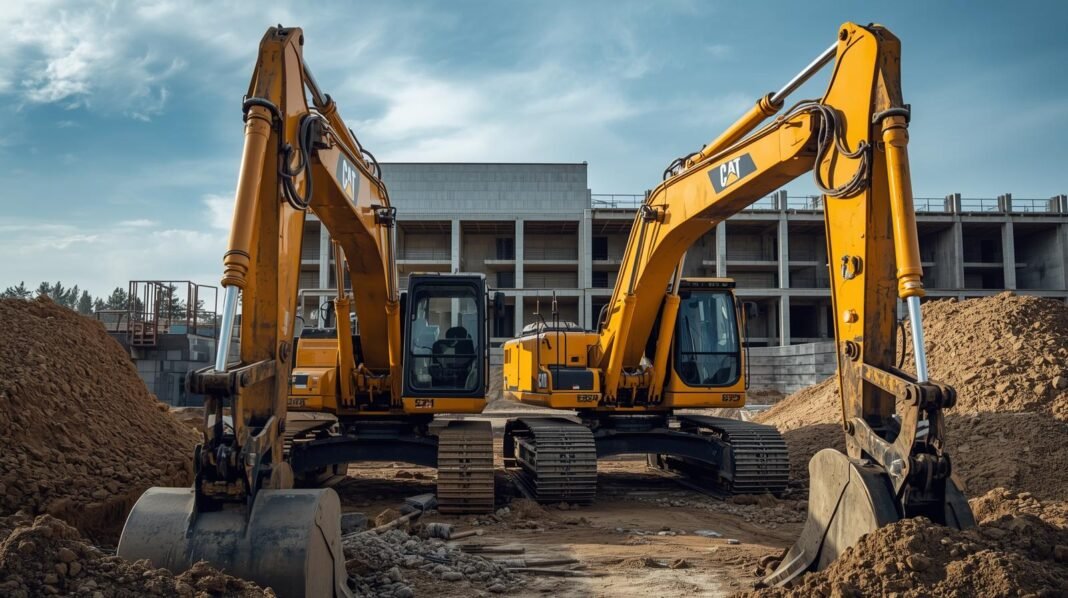
Whether you are a small excavation contractor purchasing your first machine or a large fleet manager optimizing capital expenditure across dozens of assets, understanding the true cost of excavators in 2026 is essential to making a sound financial decision.
Excavator prices have undergone considerable volatility since 2020, shaped by pandemic-era supply disruptions, shifting demand cycles, post-inflation normalization, and rapid advances in machine technology.
This comprehensive guide breaks down 2026 excavator pricing across machine classes, brands, and condition categories.
It compares the total cost of ownership (TCO) for new versus used equipment, highlights the key factors that drive price premiums, and provides actionable guidance for buyers at every budget level.
Whether you are evaluating 2026 excavator prices for the first time, comparing new excavator cost against used excavator price, or modeling excavator depreciation into a capital plan, this guide has you covered.
2. Global Excavator Market in 2026
2.1 Industry Trends Affecting Pricing
The global construction equipment market has stabilized considerably entering 2026 after the post-pandemic turbulence of the early 2020s. Sustained infrastructure investment across the US, Europe, and Southeast Asia continues to support firm demand for mid-size and large machines.
Supply chains have largely normalized after the 2022-2023 component shortage crisis, though some specialized electronics and hydraulic components still carry extended lead times with certain manufacturers.
The growing availability of electric and hybrid excavators is creating a two-tier new-equipment market, with zero-emission machines commanding significant premiums over conventional diesel models. Dealer inventory levels at major OEMs have recovered from historic lows, modestly improving buyer leverage on new machine transactions, particularly at year-end.
2.2 Economic Factors Influencing 2026 Excavator Costs
Inflation in most developed markets has moderated to the 2-3% range, slowing the pace of new equipment price increases but leaving machines materially more expensive than pre-2020 equivalents — a cumulative increase of approximately 20-30%.
Financing costs remain elevated relative to the near-zero rate environment of 2020-2021, making total cost of ownership calculations more important than sticker price comparisons alone.
Diesel prices have stabilized, but operators of older, less fuel-efficient machines face escalating cost disadvantages versus newer Tier 4 Final and Stage V engines.
3. New Excavator Costs in 2026
3.1 Price Ranges by Machine Class
New excavator pricing in 2026 spans a wide range depending on machine size, configuration, and technology level. The following table provides typical retail price ranges (USD) for machines purchased from authorized dealers in North America.
| Machine Class | Weight Range | Typical New Price (USD) | Common Applications |
| Mini / Compact (Class 1-2) | 1 – 6 tonnes | 5,000 – 5,000 | Landscaping, utility, urban work |
| Small (Class 3-4) | 6 – 14 tonnes | 5,000 – 85,000 | General civil, drainage, site prep |
| Mid-Size (Class 5-6) | 14 – 30 tonnes | 85,000 – 60,000 | Road construction, building excavation |
| Large (Class 7-8) | 30 – 50 tonnes | 60,000 – 50,000 | Mining, heavy civil, quarrying |
| Ultra / Mining Class | 50+ tonnes | 50,000 – ,000,000+ | Surface mining, large quarry operations |
| Electric / Hybrid Mini | 1 – 8 tonnes | 0,000 – 80,000 | Urban, zero-emission zones, indoor use |
Final transaction prices vary based on dealer location, options packages, attachments, trade-in value, and negotiated discounts. Year-end purchases and volume fleet deals can yield discounts of 5-12% on new equipment.
3.2 Price Differences by Top Brands
Brand positioning plays a significant role in new excavator pricing. Premium brands command higher sticker prices but typically offer better residual values, broader dealer networks, and more comprehensive support ecosystems.
The following table illustrates approximate price positioning for a standard 20-tonne mid-size excavator.
| Brand | Model (20-tonne) | Approx. New Price (USD) | Price Tier | Key Strength |
| Caterpillar | CAT 320 | 85,000 – 40,000 | Premium | Dealer network, resale value, Cat Command |
| Komatsu | PC210 | 70,000 – 25,000 | Premium | Intelligent Machine Control, reliability |
| Hitachi | ZX200 | 65,000 – 15,000 | Premium | Hydraulic efficiency, ZAXIS telematics |
| John Deere | 345 P-Tier | 60,000 – 10,000 | Premium-Mid | Dealer coverage, JDLink telematics |
| Volvo CE | EC220 | 55,000 – 05,000 | Premium-Mid | Fuel efficiency, EC-Mode technology |
| Liebherr | R 920 | 70,000 – 30,000 | Premium | German engineering, Litronic system |
| Doosan / HD Hyundai | DX225 | 35,000 – 80,000 | Mid | Value pricing, improving dealer network |
| SANY / XCMG | SY215 / XE215 | 60,000 – 15,000 | Value | Lower acquisition cost, growing support |
3.3 Technology Features That Drive Price Premiums
- Grade control and machine guidance: GPS-based grade control systems add 5,000-0,000 but dramatically reduce cut-and-fill cycle times and grade checking labor on earthmoving projects.
- Advanced telematics and remote monitoring: Platforms like Cat VisionLink, KOMTRAX, and Hitachi ConSite enable predictive maintenance and utilization tracking. Some extended data packages carry annual subscription fees of 00-,000.
- Fuel-efficiency technology: Stage V / Tier 4 Final engines with power management modes deliver 10-20% fuel savings versus older designs, often offsetting the premium within 2-3 years for high-utilization machines.
- Operator safety systems: 360-degree monitoring, proximity detection, and load moment indicators add ,000-5,000 to mid-market configurations and are increasingly mandated on larger projects.
- Electric and hybrid powertrains: Zero-emission mini excavators carry 60-100% price premiums versus diesel equivalents, with incentives and lower operating costs improving the case in high-utilization urban applications.
4. Used Excavator Prices in 2026
4.1 Typical Price Ranges by Age, Hours, and Condition
The used excavator market in 2026 offers considerable value for buyers willing to accept some additional risk.
The following table provides indicative ranges for used mid-size excavators (18-25 tonne class). For mini excavators, apply a 45-60% reduction to these figures.
| Age / Hours | Condition | Typical Used Price (USD) | Key Considerations |
| 0-2 years / under 2,000 hrs | Like New / CPO | 95,000 – 65,000 | May carry remaining warranty; often ex-rental or demo |
| 2-4 years / 2,000-5,000 hrs | Very Good | 45,000 – 00,000 | Sweet spot for value; inspect undercarriage carefully |
| 4-6 years / 5,000-8,000 hrs | Good | 00,000 – 55,000 | Budget for undercarriage rebuild (~5,000-5,000) |
| 6-9 years / 8,000-12,000 hrs | Average / Working | 5,000 – 10,000 | Higher maintenance risk; full pre-purchase inspection essential |
| 10+ years / over 12,000 hrs | Fair / Project | 0,000 – 0,000 | Parts risk; suitable for low-utilization or backup roles |
4.2 How Location and Availability Affect Used Pricing
In North America, the US market is deep and liquid for Cat, Komatsu, and Deere equipment with broad price transparency via online auction platforms.
Buyers in the Midwest and Southeast often find better value than coastal markets. In Europe, Stage V compliance requirements constrain the supply of older machines for on-highway applications, driving premiums for compliant used equipment.
Southeast Asia, Africa, and Latin America frequently source quality used equipment from Japan, where rigorous dealer maintenance programs produce well-documented ex-rental machines at competitive export prices.
4.3 The Secondary Market in 2026
Auction activity through Ritchie Bros. and IronPlanet remains the primary price discovery mechanism for late-model equipment.
Timed online auctions have expanded buyer reach globally but have also increased competition for the best machines.
Certified Pre-Owned programs from major OEMs offer added warranty protection at a modest premium to private market pricing. CPO machines in the 2-4 year bracket represent a compelling middle ground between new and pure used market options.
5. New vs Used Excavator: Cost Comparison
5.1 Side-by-Side Total Cost of Ownership (5-Year Horizon)
The following comparison uses a representative 20-tonne mid-size excavator, comparing a new machine against a 3-year-old, 4,500-hour used equivalent over five years.
| Cost Element | New Machine | Used Machine (3yr / 4,500 hrs) | Notes |
| Purchase Price | 05,000 | 55,000 | New includes full tech package |
| Estimated Resale (5yr) | 30,000 – 55,000 | 5,000 – 0,000 | New retains better residual percentage |
| Net Depreciation Cost | 50,000 – 75,000 | 5,000 – 00,000 | Over 5-year ownership horizon |
| Warranty Coverage | Full OEM (2-3 years) | Limited or none | Extended warranty option: +,000-8,000 |
| Maintenance Cost (5yr) | 5,000 – 0,000 | 5,000 – 5,000 | Used = higher risk of major repairs |
| Financing Cost (5yr @ 7%) | ~2,000 | ~2,000 | Based on purchase price financed at 7% |
| Fuel Cost Differential | /bin/sh baseline | ,000 – 8,000 higher | ~10-15% higher fuel burn on older engine |
| Total 5-Year Ownership Cost | 47,000 – 87,000 | 70,000 – 33,000 | Excluding operator and insurance |
The analysis shows used equipment offers a lower total 5-year cost in most scenarios, but the gap narrows when maintenance risks, financing costs, and fuel savings are fully accounted for.
High-utilization buyers running 1,500+ hours per year will find the gap narrows further.
5.2 TCO Factors to Account For
- Acquisition cost: Net capital consumed = purchase price minus expected resale value at end of ownership period.
- Maintenance and repair: Scheduled service, wear parts (bucket teeth, cutting edges, undercarriage), and unplanned repairs. New machines under warranty eliminate most unplanned repair risk for 2-3 years.
- Undercarriage: A full rebuild on a 20-tonne machine typically costs 5,000-8,000. Used machines near 6,000-8,000 hours often face imminent undercarriage investment.
- Fuel and fluids: Newer Tier 4 Final / Stage V machines typically consume 8-14% less diesel than pre-Tier 4 equivalents — significant for fleets running 1,500+ hours per year.
- Financing: Interest costs over the ownership term can add 15-25% to the effective cost of a financed purchase. Always calculate the all-in financed cost.
5.3 Pros and Cons: New vs Used
| Factor | New Excavator | Used Excavator |
| Acquisition Cost | Higher upfront investment | Lower upfront acquisition cost |
| Warranty | Full OEM warranty (2-3 years typical) | Limited or expired; CPO options available |
| Technology | Latest generation; full emissions compliance | May lack modern tech; older emissions tier |
| Reliability Risk | Very low — no wear history | Moderate to higher depending on age/hours |
| Resale Value | Better long-term residual | Slower depreciation curve on older machines |
| Financing Terms | OEM promotional rates often available | Standard commercial financing; fewer promos |
| Delivery Lead Time | 6-16 weeks for some models/specs | Immediate availability on most units |
| Emissions Compliance | Latest Tier 4F / Stage V standards | Older machines face restrictions in some regions |
6. Factors That Influence Excavator Cost
6.1 Brand Reputation and Residual Value
Brand equity is a quantifiable financial asset in the excavator market. Caterpillar, Komatsu, and Hitachi consistently retain 55-70% of purchase price at the 3-year mark versus 40-55% for mid-tier brands and 25-40% for value-tier brands.
For buyers who rotate equipment every 3-5 years, this residual value difference can outweigh the initial price premium of a premium brand machine.
6.2 Machine Size and Capabilities
Size drives cost almost linearly within the excavator market. Right-sizing to application is essential — oversized machines increase acquisition cost, fuel consumption, and transport costs, while undersized machines reduce productivity and accelerate wear.
The mid-size 14-25 tonne class has the most liquid used market, benefiting buyers on both entry and exit.
6.3 Condition, Hours, and Maintenance History
For used equipment, three factors dominate pricing: engine hours logged, quality of maintenance history, and physical condition of key systems. A well-documented service history from a single owner with oil analysis records and dealer service records can justify a 15-25% price premium.
Always invest in a pre-purchase inspection by a qualified independent mechanic before committing to any used purchase above 0,000.
6.4 Market Demand and Seasonality
Demand peaks in spring (March-May) and briefly in fall as contractors finalize year-end capital purchases.
Buyers with timing flexibility find better pricing in November-January. Auction results in December and January frequently show 5-10% discounts versus spring peak pricing for equivalent equipment.
7. Tips for Buyers in 2026
7.1 How to Negotiate Pricing
- Research comparable sales first: Use IronPlanet, Ritchie Bros. AuctionTime, and MachineryTrader sold listings to establish market-clearing prices before engaging dealers or private sellers.
- Leverage year-end timing: Dealers face quota pressure in Q4. Buyers closing in November or December can often negotiate 5-10% discounts, free extended warranties, or added attachments on new purchases.
- Bundle attachments and service: Package pricing for attachments and extended service agreements typically yields better economics than negotiating each item separately.
- Use competing quotes: Obtain written quotes from at least two authorized dealers for identical specifications. Competition between dealers creates meaningful room for improvement.
- Be prepared to walk away: Having a second-choice machine identified before entering serious negotiation strengthens your position considerably.
7.2 Pre-Purchase Inspection Checklist for Used Excavators
- Undercarriage wear: Measure track shoe thickness, roller and idler wear, sprocket condition. Remaining undercarriage life is the single largest variable in used machine value.
- Hydraulic system: Check for cylinder seal leaks, hose condition, pump performance under load, and response time on stick, boom, and bucket functions.
- Engine: Cold and warm start behavior, oil pressure and temperature, exhaust smoke color under load, and oil analysis results if available from the seller.
- Structural integrity: Inspect boom, stick, and upper frame for cracks, repairs, or signs of impact damage. Structural damage should heavily discount a machine value even if cosmetically repaired.
- Electrical and telematics: Test all cab functions, connectivity, camera systems, and pull error code history via the diagnostic port.
- Hour meter consistency: Verify that physical condition is consistent with logged hours. Excessive wear relative to stated hours warrants close scrutiny.
7.3 Financing and Leasing Options
- OEM captive financing: Cat Financial, Komatsu Financial, and John Deere Financial frequently offer promotional rates as low as 0-2.9% for 24-36 months on new equipment — highly competitive versus bank alternatives.
- Commercial bank financing: Generally competitive for established businesses with strong credit, particularly for used equipment where OEM financing is unavailable.
- Operating leases: Preserve balance sheet flexibility with predictable monthly costs but offer no residual value upside. Better suited for businesses with variable long-term equipment needs.
- Rental-purchase agreements: Allow rental payments to apply toward purchase price, providing flexibility at the cost of higher total outlay if the purchase option is exercised.
7.4 When New Equipment Is Worth the Premium
- High utilization (1,500+ hours/year): Reduced downtime, better fuel efficiency, and full warranty coverage during the most intensive use period justify premium pricing.
- Specialized configurations required: When specific technology packages are needed and unavailable in the used market.
- Emissions compliance mandated: Projects or regions requiring Stage V or Tier 4 Final compliance make new or late-model equipment the only viable option.
- Long ownership horizons (8-12 years): New equipment often provides better lifetime economics than a succession of used purchases.
8. Conclusion
The 2026 excavator market offers buyers options ranging from value-tier used machines at 0,000 to premium new configurations at 50,000 or more. The right choice depends on utilization intensity, required technology level, budget constraints, and planned ownership duration.
For small contractors and owner-operators, a well-sourced used excavator in the 3-6 year, 4,000-7,000 hour range from a premium brand with documented service history often delivers the best balance of acquisition cost, reliability, and features.
For large fleet operators and high-utilization contractors, the business case for new equipment strengthens considerably when OEM promotional financing, fuel savings, warranty coverage, and technology productivity benefits are properly modeled.
Regardless of the path chosen, total cost of ownership — not sticker price — should drive every excavator purchasing decision in 2026.
9. Frequently Asked Questions
Are used excavators worth it in 2026?
Yes, for most buyers. A well-maintained used excavator in the 2-5 year age bracket from a premium brand typically offers the best value proposition — significantly lower acquisition cost with manageable maintenance risk.
The key is thorough pre-purchase inspection, verified service history, and realistic budgeting for undercarriage and hydraulic maintenance.
How much should I pay for a 5-tonne excavator in 2026?
A new 5-tonne mini excavator from a major brand (Cat 305, Komatsu PC55, Kubota KX057) typically retails in the 5,000-5,000 range. Used 5-tonne excavators in good condition (3-5 years, under 3,000 hours) are commonly available for 5,000-0,000. Chinese-branded equivalents are available new from 2,000-2,000 but carry higher residual value risk.
What is the depreciation rate for excavators?
Excavators depreciate most rapidly in the first 2-3 years. Premium-brand machines typically lose 25-35% of purchase price in year one, then depreciate at roughly 10-15% per year depending on hours and condition.
By year 5 (approximately 7,500 hours), a well-maintained premium excavator retains around 40-55% of its original value.
What are the best excavator brands for resale value in 2026?
Caterpillar, Komatsu, and Hitachi consistently lead used market residual values across all machine classes. John Deere and Volvo CE perform strongly in North America and Europe respectively.
For buyers seeking lower acquisition cost with less concern for resale, Doosan (HD Hyundai) and SANY offer competitive new machines at 10-25% below premium brand pricing.
How many hours is too many on a used excavator?
Machines exceeding 10,000-12,000 hours are approaching the end of economic service life without major component rebuilds.
Machines in the 6,000-9,000 hour range from premium brands with good maintenance records can still offer significant value if buyers budget for undercarriage, pump, and final drive maintenance.
Below 5,000 hours, properly maintained premium-brand machines carry relatively low mechanical risk.
Is it better to lease or buy an excavator in 2026?
Leasing makes most sense for businesses wanting predictable costs, needing to preserve borrowing capacity, or uncertain about long-term needs.
Buying is generally more economical for businesses with 5+ year utilization plans.
OEM promotional financing on new equipment often makes purchase economics more attractive than operating lease alternatives for high-utilization buyers in the current rate environment.
What should I check before buying a used excavator?
Prioritize undercarriage wear measurements, hydraulic system condition (seals, hose condition, pump performance), engine condition (cold start, oil analysis, exhaust under load), structural integrity (cracks or repairs on boom and stick), and operational history (hour meter consistency, service records, telematics data).
Always use an independent qualified mechanic for inspections on purchases above 0,000.
Also Read
Crane Rental Cost Per Day vs. Ownership Cost: Which Option Actually Saves You Money?
How Much Does a Bulldozer Cost? A Complete Price Comparison by Size Class

