
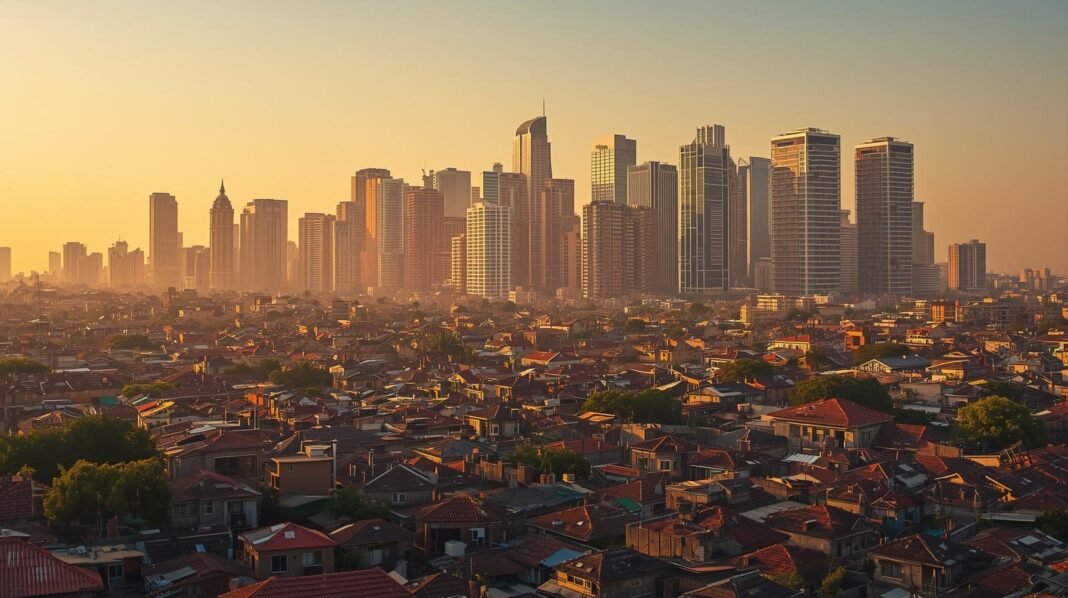
March 2026__Africa is urbanising faster than any continent in human history.
By 2050, an estimated 700 million additional people will crowd into its cities — a wave of humanity equivalent to nearly twice the current population of the United States arriving in African urban centres within a single generation.
Yet today, the continent already faces a catastrophic shortfall of at least 51 million housing units, with a financing gap that the International Finance Corporation (IFC) puts at a staggering $1.4 trillion.
This is not a distant, abstract crisis. In Nairobi’s Kibera slum — one of Africa’s largest — roughly 250,000 people are packed into 2.5 square kilometres of corrugated tin and mud.
In Cape Town’s townships, residents who applied for subsidised housing in 1993 are still waiting in 2024.
In Lagos, entire families routinely sleep in construction sites, unfinished buildings and under bridges.
Across the continent, 54 million Africans live in urban slums, a number set to balloon further unless governments, developers, and financiers change course.
The problem, experts agree, is profoundly systemic. It is not just a question of money.
It is a crisis woven from broken land policies, stunted mortgage markets, infrastructure deficits, governance failures, and a construction industry still building the wrong houses for the wrong people.
This article examines the six most critical challenges standing between Africa and a future of adequate, affordable shelter — drawing on the most current research, on-the-ground case studies from Kenya, South Africa, Ethiopia, Morocco, and Rwanda, and the voices of experts who have spent careers working on solutions.
⚠️
KEY FIGURES
51 million housing units deficit across Africa
$1.4 trillion financing gap (IFC)
54 million Africans currently in urban slums
By 2030, the deficit is projected to reach 130 million units
Challenge 1: The Land Puzzle — Who Owns What, and Who Decides
In virtually every African country, land is political. It is ancestral. It is contested. And for the purposes of affordable housing development, it is often an intractable nightmare.
The core problem is fragmentation and opacity. Multiple, contradictory land tenure systems coexist across the continent — customary law, formal title, leasehold, and freehold often apply simultaneously to the same piece of ground.
Land registries are frequently out of date, non-computerised, or missing entirely.
In Kenya, Habitat for Humanity estimates that 68% of Kenyans lack land documentation or secure tenure.
Across sub-Saharan Africa, the result is a legal minefield that discourages private investment, drives up land acquisition costs, and leaves residents in informal settlements perpetually vulnerable to eviction.
In Kenya, the situation is emblematic of a broader continental failure. Urban land in Nairobi has appreciated dramatically as population pressure has intensified, pricing out low-income developers and pushing the poor further into peripheral informal settlements far from jobs and services.
The government’s Affordable Housing Programme under President William Ruto has attempted to address this by zero-rating the cost of land for designated projects and streamlining registration, with some results: the price of a standard affordable housing unit reportedly fell from KSh 11 million (approximately $85,000) in 2017 to KSh 3 million ($23,000) by 2024.
But the underlying structural problems remain.
South Africa’s land challenge carries the additional weight of apartheid’s spatial legacy. The 1994 Reconstruction and Development Programme (RDP) committed the post-apartheid government to reversing the racial geography of forced removals — but in practice, over three decades, the delivery of free, subsidised houses at the urban periphery has often deepened spatial inequality rather than reversed it.
New townships were built far from economic centres, replicating in democratic South Africa the disconnected geography of apartheid.
Gauteng Adjunta Jeffrey Budlender has bluntly assessed the result: “We have a housing and segregation crisis that is extreme here — but we don’t see enough government action to match this crisis.”
Community land rights also create obstacles when governments attempt to redevelop informal settlements.
In Kenya, the Mukuru Housing Project — intended to be one of the continent’s largest urban renewals, with over 100,000 housing units in Nairobi’s Mukuru kwa Reuben settlement — has faced delays and community resistance over concerns about displacement and inadequate compensation, repeatedly pushing back occupancy timelines.
Contrast this with Morocco’s approach. The Kingdom launched its “Villes Sans Bidonvilles” (Cities Without Slums) programme in 2004 with a mandate to resolve the land question through coordinated state land release and resettlement.
By 2024, the initiative had rehoused 1.6 million people and reduced the national slum population by 60%.
The state’s ability and willingness to mobilise public land at scale — and its willingness to provide serviced plots rather than wait for private developers to solve the problem — was the decisive factor.
For sub-Saharan governments, the lesson is clear: housing cannot scale without first resolving the land question.
The challenge for policymakers, regulators, and the private sector is not to constrain informal efforts with false trust in the formal, but rather to leverage them through better understanding of what leads to, emboldens, and calls for the informal.
— Kecia Rust
Executive Director, Centre for Affordable Housing Finance in Africa (CAHF)
IMF Finance & Development, December 2024
Challenge 2: The Mortgage Mirage — Finance That Reaches Almost Nobody
In a functioning housing market, mortgages are the engine that transforms savings into homeownership. In Africa, for the vast majority of the population, that engine does not exist.
The numbers are stark. Across sub-Saharan Africa, mortgage finance reaches between 1% and 5% of households.
In Kenya, a country of approximately 55 million people, the Central Bank of Kenya counts only around 27,000 to 30,000 active mortgages — a ratio that would be considered extraordinary even by comparison to the continent’s least-developed nations.
In Nigeria, with a population exceeding 220 million, formal mortgage penetration remains similarly thin.
In South Africa, which has the most sophisticated financial system on the continent, the mortgage market has still “not made notable expansions” at the lower-income end of the market, according to the Centre for Affordable Housing Finance in Africa.
The structural barriers are multiple and mutually reinforcing. High interest rates make long-term loans prohibitively expensive: Kenyan developers face commercial financing rates of 18–22%, according to Milkah Ndegwa, CEO of MilikiSpace Properties Ltd in Nairobi.
Foreign developers, by contrast, can access capital at 4–8%. This creates, as Ndegwa puts it, “a competitive disadvantage for local developers and significantly impacts the affordability of housing projects.”
There is also a fundamental mismatch between how most Africans earn money and how mortgage systems are designed to work.
assume regular, documented, formal employment with reliable payslips. But across the continent, the majority of the urban workforce is in informal employment — street traders, artisans, domestic workers, small-scale entrepreneurs — whose incomes are real but undocumented and variable.
Banks, designed around formal employment, have little appetite or infrastructure to serve these customers.
KENYA MORTGAGE GAP:
Only 11% of Kenyans earn enough to support a standard mortgage.
Just 2% of formally constructed houses cater to low-income families.
The government aims to grow mortgage accounts from 30,000 to 1,000,000 by 2027.
KENYA MORTGAGE GAP: Only 11% of Kenyans earn enough to support a standard mortgage. Just 2% of formally constructed houses cater to low-income families. The government aims to grow mortgage accounts from 30,000 to 1,000,000 by 2027.
In South Africa, the problem has a specific structural dimension analysts call the “gap market”: households earning too much to qualify for free government RDP housing but too little to secure a bank-financed home.
This middle 30% of the income distribution — an estimated millions of households — falls through the cracks of both public and private housing systems.
Renier Kriek, managing director of Sentinel Homes, argues that the gap housing crisis is “rooted in flawed market design and bureaucratic inefficiencies,” with prohibitive costs and complexities around evictions and foreclosures making it “financially unviable for investors to take risks on lower-income consumers.”
Innovative approaches are beginning to emerge. Kenya’s Kenya Mortgage Refinance Company (KMRC), modelled on similar institutions in Tanzania and Nigeria, aims to mobilise cheaper long-term finance from institutional investors and lend it on to primary lenders at reduced rates.
The government’s Affordable Housing Act 2024 introduced a 1.5% housing levy on gross salaries — matched by employers — to capitalise an Affordable Housing Fund, though analysts note that the absorption rate of these funds into actual housing delivery remains low.
In Mozambique, a housing developer has experimented with blockchain technology to validate financial information, dramatically expanding the pool of borrowers who can demonstrate creditworthiness.
According to Kecia Rust of CAHF, this technological intervention helped make homes accessible to 80% of the population, compared to just 3% under traditional mortgage models. E-lending approaches that support rent-to-buy schemes offer further promise for those excluded from conventional homeownership pathways.
Challenge 3: The Infrastructure Trap — Building Houses Before Roads, Water, or Power
A house without water, electricity, or access to a road is not a home — it is a shelter.
Across sub-Saharan Africa, an enormous proportion of newly constructed affordable housing falls into this category, because the infrastructure needed to make it liveable either does not exist or arrives years after residents move in.
The pattern is well-documented: in many African cities, construction happens first, and the provision of infrastructure — reliable electricity, clean water supply, sanitation services, efficient transport — follows, if it follows at all.
This puts a huge burden on developers, who are forced to provide their own infrastructure and transfer the costs to buyers, pushing prices beyond what lower-income households can afford.
It also defeats the purpose of locating affordable housing in cheaper peripheral areas, since the lack of transport links to economic centres means residents spend hours and significant portions of their incomes commuting.
The problem is acutely visible in Kenya’s Nairobi Metropolitan Region. Satellite towns like Athi River, Ngong, and Mlolongo have seen rapid housing development — but road infrastructure, water networks, and wastewater systems have struggled to keep pace.
Infrastructure deficits have repeatedly been cited by the BuyRentKenya real estate platform and industry analysts as hindering “the appeal and feasibility of new developments” in these areas.
South Africa’s informal settlement crisis has a specifically climate-vulnerable dimension.
Amnesty International’s 2025 report on South African informal settlements found that the lack of well-located affordable housing has driven the growth of settlements on flood-prone and low-lying land, with millions of residents facing repeated flood and climate risks — and inadequate government disaster preparedness in response.
The KwaZulu-Natal Department of Human Settlements acknowledged in October 2025 that “informal settlements are not planned settlements and inherently their establishment would not be preceded by the availability of basic services” — a statement Amnesty International characterised as an abdication of constitutional responsibility.
Ethiopia’s Integrated Housing Development Programme (IHDP) — one of the most ambitious mass housing efforts on the continent, having built over 400,000 to 500,000 condominium units in Addis Ababa since 2006 — offers a cautionary lesson about the infrastructure-housing nexus.
Despite the scale of construction, academic researchers have found that many IHDP recipients could not afford loan repayments and were forced to vacate units, in part because developments on the urban periphery lacked adequate transport links to employment centres and social services.
The programme succeeded in construction but struggled with the connected infrastructure and livability that make housing truly affordable to occupy.
Governments and planners are beginning to draw lessons. The most effective approaches — Morocco’s VSB, parts of Rwanda’s Kigali development programme — have insisted on serviced land as the prerequisite for housing development, rather than its laggard companion.
Challenge 4: The Governance Gap — Corruption, Capacity, and Political Will
The delivery of affordable housing is, at its core, a governance challenge. Where institutions are strong, transparent, and well-funded, housing programmes can be transformative.
Where they are weak, captured, or corrupt, even well-intentioned programmes deliver negligible results or actively harm the people they are meant to help.
South Africa’s housing story is a powerful case study in governance failure. Since 1994, the government’s RDP programme has built over five million homes — an extraordinary quantitative achievement.
Yet annual delivery rates have collapsed from over 200,000 units in the 1990s to fewer than 35,000 by 2023, according to research published in Frontiers in Sustainable Cities.
Of the four million houses delivered, an estimated 1.6 million title deeds remain unissued to beneficiaries — a bureaucratic failure that leaves households unable to use their homes as collateral, sell them formally, or extract equity.
Multiple government housing projects have been plagued by contractor fraud, substandard construction, and the collapse of buildings.
And by 2025, South Africa’s National Treasury was projecting that 22% of total revenue would be consumed by interest payments, leaving even less for housing and municipal services.
Kenya tells a similarly frustrating story. In 2022, the government pledged to build 500,000 affordable housing units by the end of 2022 under the “Big Four Agenda.”
By the end of 2021, just 431 units — less than 1% of the target — had been delivered. Administrative hurdles, bureaucratic bottlenecks, and corrupt officials creating obstacles to extort money from developers have been repeatedly cited by researchers at the University of Nairobi as systemic problems.
The current Ruto administration’s Affordable Housing Programme has made more visible progress — with major projects underway in Kibera, Shauri Moyo, and the massive Mukuru project — but legal disputes have repeatedly delayed occupancy timelines, with the initial Mukuru move-in target shifted from December 2024 to April 2025.
NIGERIA WARNING: Experts in Nigeria’s housing sector reported in 2024 that delayed government payments, escalating material costs, demolitions, and compulsory acquisitions in Lagos and Abuja continued to discourage private investors from the affordable segment.
Political will is also an issue of priority. Housing rarely generates the short-term political returns that other expenditures do, and most African governments are deeply dependent on a few high-return economic sectors.
A drastic reorientation of government priorities toward affordable housing — at the expense of other politically rewarding investments — is a difficult ask for elected officials accountable to immediate constituencies.
Rwanda offers a notable contrast. Under President Paul Kagame’s administration, which won a fourth term in July 2024, the Rwanda Housing Authority has pursued a coordinated, data-driven approach to housing development, offering tax incentives to developers and establishing a coherent institutional framework.
Rwanda’s mortgage-to-GDP ratio of 3.35% is relatively high for the region. The country’s registered mortgages grew from 27,384 in 2022 to 36,331 in 2023.
Rwanda is now advancing plans for a Rwanda Mortgage Refinancing Company modelled on successful institutions in Kenya, Tanzania, and Nigeria.
While Rwanda’s housing sector remains far from meeting projected demand — the country will need an estimated 5.5 million dwelling units by 2050 — its institutional coherence provides a model for the continent.
Challenge 5: The Cost Crisis — Construction Economics That Don’t Add Up
Even when land is available, finance is accessible, and governments are willing, the economics of construction remain deeply challenging across most of sub-Saharan Africa.
The cost of building decent, durable housing — when factoring in materials, labour, regulatory compliance, and financing of the construction process itself — frequently exceeds what any realistic tenancy or sales model can recover from low-income households.
Construction materials are a persistent pressure point. Most African countries import significant volumes of building materials — steel, cement, fittings, electrical components — at prices denominated in hard currency.
Currency volatility, global commodity price swings (particularly acute since the Russia-Ukraine war), and import duties make costs unpredictable and often prohibitive.
In South Sudan, where inflation reached 54.8% in 2024 and the currency has experienced significant depreciation, the cost of imported building materials has become extraordinary relative to local incomes.
The construction sector across sub-Saharan Africa is also characterised by shallow supply chains.
Large formal contractors often lack the subcontractors, materials suppliers, and skilled tradespeople needed to scale up production rapidly. This creates bottlenecks that limit output even when funding is available.
Technology offers some pathways through the cost crisis. Kenya’s experience suggests that standardising building designs and components, manufacturing them off-site, and assembling on-site can meaningfully cut both costs and construction time.
Alternative and innovative building materials — compressed earth blocks, recycled materials, locally sourced alternatives to imported steel reinforcement — have also shown promise in pilot projects.
In South Sudan, a UN-Mission-linked initiative has begun using upcycled plastic bottles filled with soil as building bricks, creating structures capable of withstanding tropical storms.
3D-printed housing has attracted significant attention as a potential game-changer. Research published in ScienceDirect in 2024 found that 3D-printed homes in Africa achieve a 48% reduction in carbon footprint and a 70% reduction in construction duration compared to conventional methods.
However, the initial costs of the technology and its reliance on imported proprietary materials currently make life-cycle costs around 381% higher than conventional construction in African contexts — meaning the technology holds extraordinary long-term promise but is not yet cost-effective at the scale needed.
Ethiopia’s Integrated Housing Development Programme demonstrated what scale and standardisation can achieve: by building condominiums at volume, the IHDP drove costs low enough to reach lower-middle income households.
The cost-sharing model — requiring beneficiaries to contribute a portion of construction costs — also helped make the programme financially viable.
Critically, the programme generated over 176,000 jobs in the construction sector, demonstrating the economic multiplier effects of large-scale housing investment.
Challenge 6: Urbanisation’s Speed — A Crisis Outrunning Every Solution
All of the above challenges are compounded by one overarching reality: Africa’s cities are growing faster than any housing intervention has yet managed to match. The continent’s urbanisation is not merely rapid; it is, in many regions, explosive.
Sub-Saharan Africa’s urbanisation rate stands at 4.4% annually in Kenya, for instance. Nairobi adds hundreds of thousands of new residents every year.
Across the continent, the United Nations projects that by 2050, an additional 700 million people will live in African cities — and by 2030, the continental housing deficit is expected to reach 130 million units if current trends continue.
The McKinsey Global Institute estimates that the affordable housing gap will impact 1.6 billion people globally by 2025, with Africa representing the most acute frontier of that crisis.
The challenge is not simply one of numbers. It is also structural. In Kenya, Habitat for Humanity estimates that annual housing demand is 250,000 units, but only approximately 50,000 are supplied — a supply-demand gap of 200,000 units per year that the accumulated deficit has compounded into a backlog of over two million units since 2008.
In South Africa, the housing backlog is estimated at between 2.2 and 3.3 million households.
The majority of Africa’s urban housing supply is, in practice, delivered informally — by households themselves, by small-scale landlords, and by the “backyard” rental sector that operates almost entirely outside policy frameworks and financial systems.
As the OECD’s Sahel and West Africa Club noted at its landmark 2025 webinar on African housing policy, the formal housing built in Africa “often follows imported templates, disconnected from local family structures and affordability thresholds.”
The sector is, in the words of the report, “systemic” in its failure — “from policy frameworks to market inefficiencies, from unsuitable architectural models to the mismatch between material supply and local demand.”
This is why experts increasingly argue that effective affordable housing policy in Africa must engage with the informal sector rather than simply trying to replace it.
Low-income households across the continent have always built incrementally — constructing starter homes, adding rooms as savings allow, subdividing plots to generate rental income. Micro-developers in South African townships have been identified as critical providers of affordable rental housing.
In Kenya, SACCOs (Savings and Credit Co-operative Societies) already play a significant role in channelling community savings into housing investment.
The question is whether policy frameworks, financial instruments, and regulatory systems can be redesigned to support and accelerate these bottom-up approaches rather than working against them.
What Is Working: Lessons From Across the Continent and Beyond
Morocco: Tackling Slums at National Scale
Morocco’s “Villes Sans Bidonvilles” (VSB) programme remains the most compelling example on the continent of a government-led slum elimination drive delivering at scale. Launched in 2004, it combined coordinated land release, subsidised housing construction, and direct community engagement.
By 2024, it had rehoused 1.6 million people and reduced Morocco’s national slum population by 60%.
In March 2024 alone, as part of its Dhs250,000 social housing programme, the government signed 1,450 agreements with the private sector for the construction of over 2 million housing units.
The lesson: coordinated state commitment to serviced land and long-term subsidy programmes, combined with genuine private-sector partnership, can move the needle significantly.
Ethiopia: Scale Through Condominiums
Ethiopia’s IHDP in Addis Ababa demonstrated what sub-Saharan governments can achieve through sheer determination and scale.
Building over 400,000 to 500,000 units since 2006 using a cost-sharing model — requiring beneficiaries to contribute a portion of costs while the state provided the bulk of financing — the programme reached income segments that commercial developers could not serve.
Its shortcomings — peripherally located units, affordability of loan repayments, limited infrastructure — offer equally important lessons about what must accompany mass housing construction.
Researchers have noted that many recipients ultimately could not sustain repayments and were displaced, generating a rental market that in turn undermined affordability. The programme is best understood as a significant but incomplete model.
Kenya: Mobilising Capital Markets and SACCOs
Kenya’s most innovative housing finance mechanisms have come not from government but from creative market actors.
Acorn Holdings’ issuance of a green bond on the Nairobi Securities Exchange in 2019, raising KSh 4.3 billion ($30.57 million) for green-certified student housing, opened a new channel for institutional capital in affordable housing.
The Kenya Mortgage Refinance Company (KMRC) has begun to bring down mortgage rates for qualifying borrowers by mobilising long-term institutional finance.
SACCOs remain the most accessible route to housing finance for millions of informal workers who cannot access bank mortgages.
And the use of GIS, drones, and satellite imagery to map informal economies — a project being explored by CAHF with the Lincoln Institute for Land Policy in Kenya — promises to generate the real-time data that city planners need to respond intelligently to informal housing dynamics.
Global Comparators: Brazil and India
Beyond Africa, two programmes offer particularly instructive models. Brazil’s “Minha Casa, Minha Vida” (My House, My Life) programme has delivered over 5 million housing units since 2009 through a public-private partnership model that tiers subsidies by income level, ensuring the deepest subsidies reach the poorest households while market mechanisms serve the middle.
India’s Pradhan Mantri Awas Yojana (PMAY) has built over 10 million affordable homes since 2015, reducing the country’s housing deficit by 30%. Both programmes succeed because of their combination of direct state subsidy, private sector capacity, and long-term political commitment.
Conclusion: A Crisis With a Clock
Africa’s affordable housing crisis is not inevitable. The continent has the land, the demographic potential, the construction workforce, and the beginning of a financial infrastructure to address it.
What it lacks, in most countries, is the combination of institutional coherence, political will, appropriate finance products, resolved land governance, and infrastructure investment needed to match the extraordinary pace of urbanisation.
The consequences of failure are not merely economic. Inadequate housing is correlated with worse health outcomes, lower educational attainment, higher crime rates, and deeper political instability.
The Shelter Afrique Development Bank’s Managing Director, Thierno-Habib Hann, put it plainly at the 2024 African Union for Housing Finance conference: “We are acutely aware of the global and regional challenges that include demographic changes, economic uncertainties, and climate change.
However, these challenges also present us with opportunities to innovate, adapt and emerge stronger as the only Pan-African institution dedicated to financing the housing sector.”
The six challenges documented in this article — broken land policy, inaccessible finance, infrastructure deficits, governance failures, construction cost crises, and the sheer speed of urbanisation — are not separate problems.
They are interconnected threads of a single systemic failure. Solving any one of them in isolation will not be enough.
What is required is the kind of “platform which can bring together multiple stakeholders from varied areas of expertise” that housing experts have long called for: governments that treat housing as a strategic priority, financial institutions willing to design products for informal-sector workers, developers open to new materials and methods, and communities involved in shaping the settlements they will live in.
The clock is ticking. By 2030 — just four years away — Africa’s housing deficit is projected to reach 130 million units if the pace of delivery does not change.
The decisions made by governments, developers, and financiers in the next decade will determine whether hundreds of millions of Africans enter the future in dignity or in the corrugated tin and mud that still characterises too much of the continent’s urban present.
Also Read
Affordable housing: Rethinking mortgage industry
Making Affordable housing a reality in Kenya

- Mulilo pledges nearly R15bn for new renewable energy projects in South Africa - April 2, 2026
- Epiroc Secures Major Order for Autonomous Electric Mining Rigs in Africa - April 1, 2026
- Best Shower Heads for Salty Water:The Complete 2026 Buyer’s Guide to Protecting Your Skin, Hair & Plumbing - April 1, 2026
